
Last updated November 23, 2026
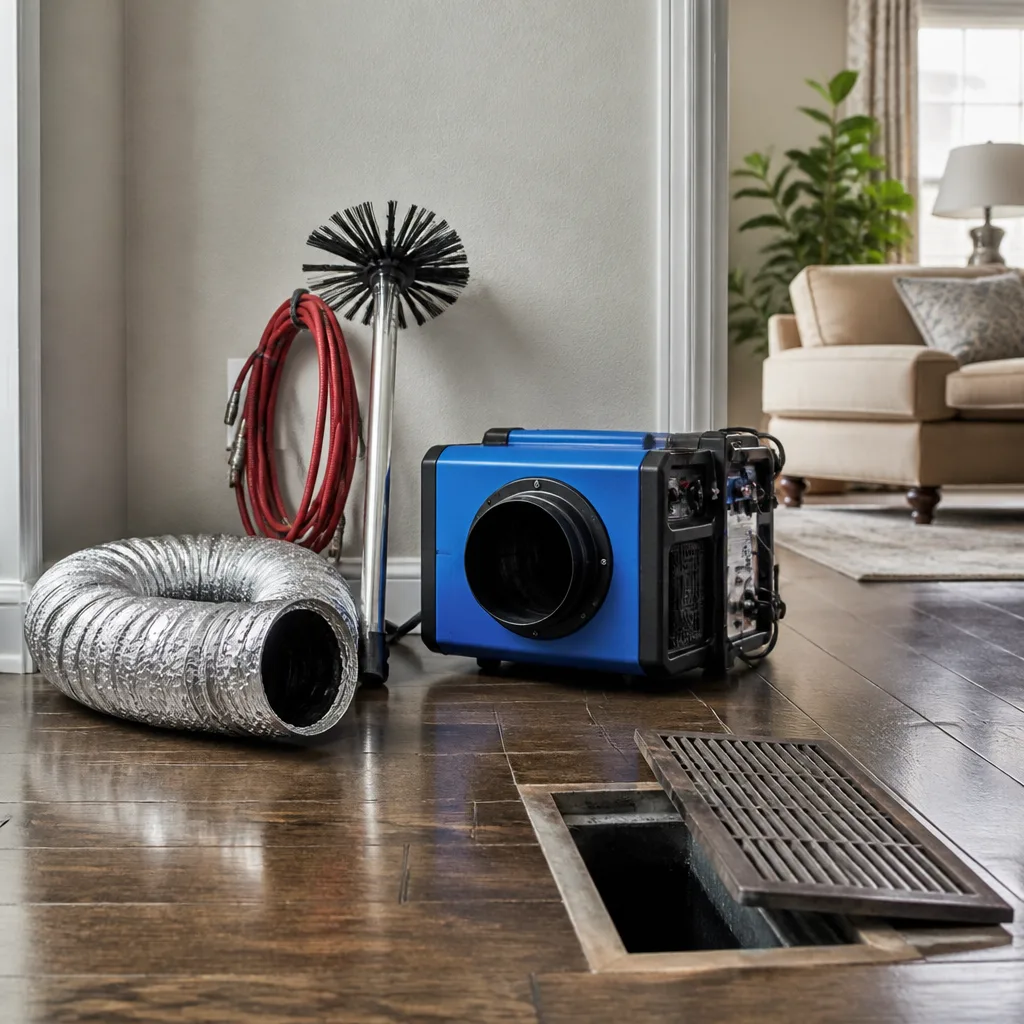 Whole-home duct cleaning
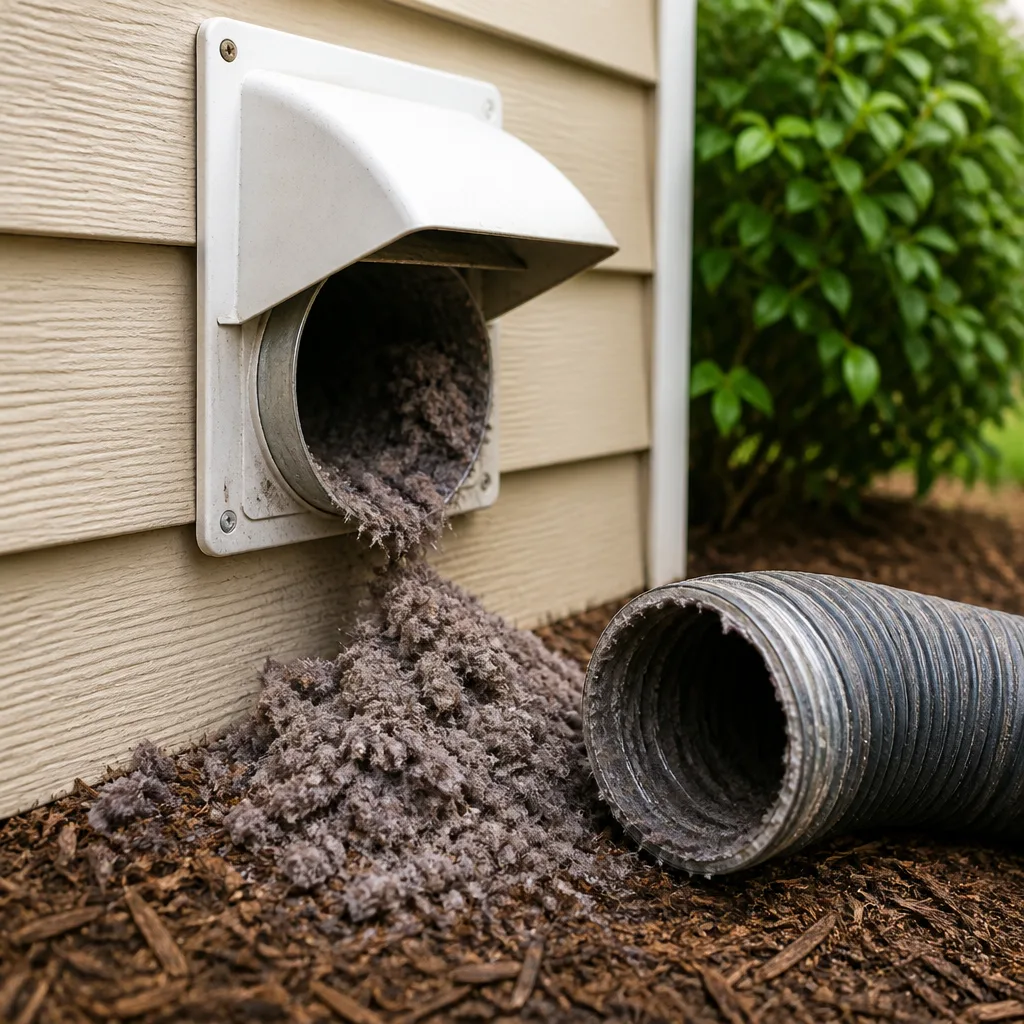 Dryer vent cleaning
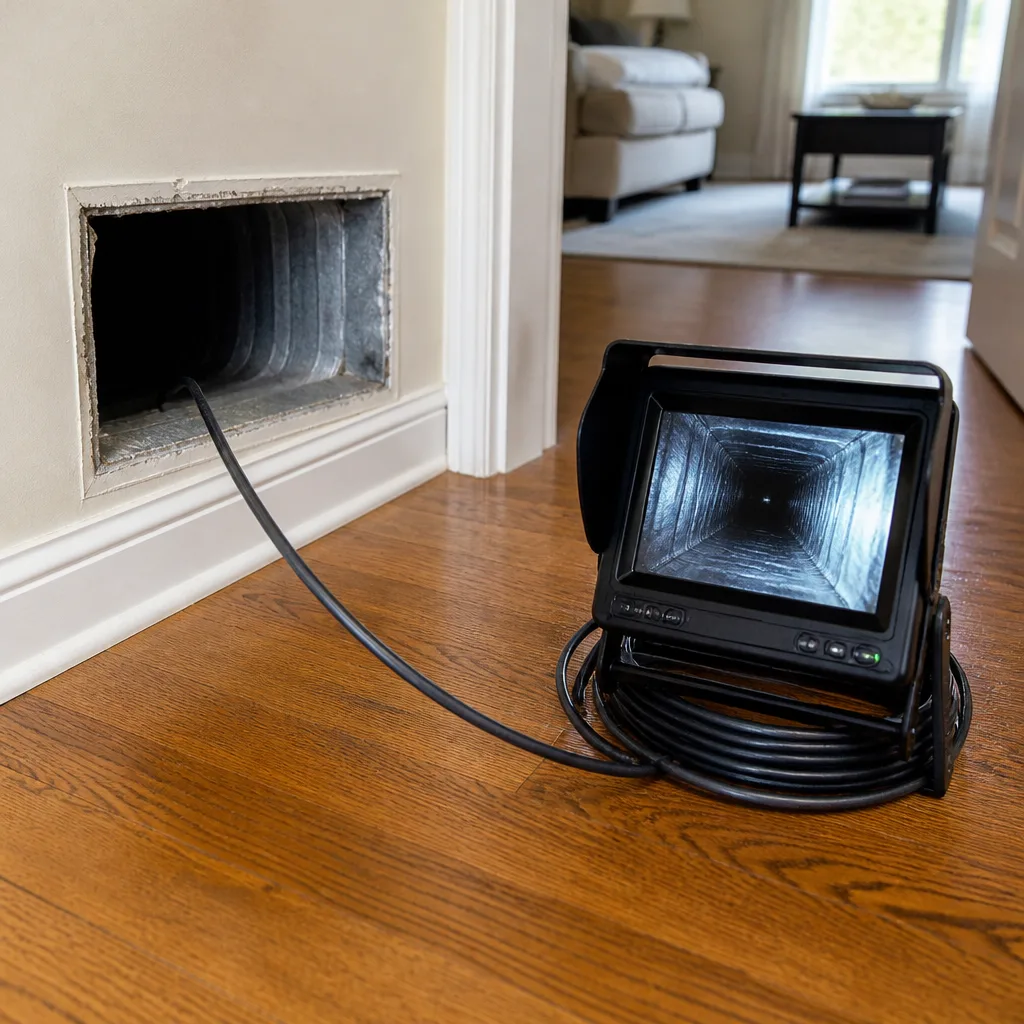 Camera inspection
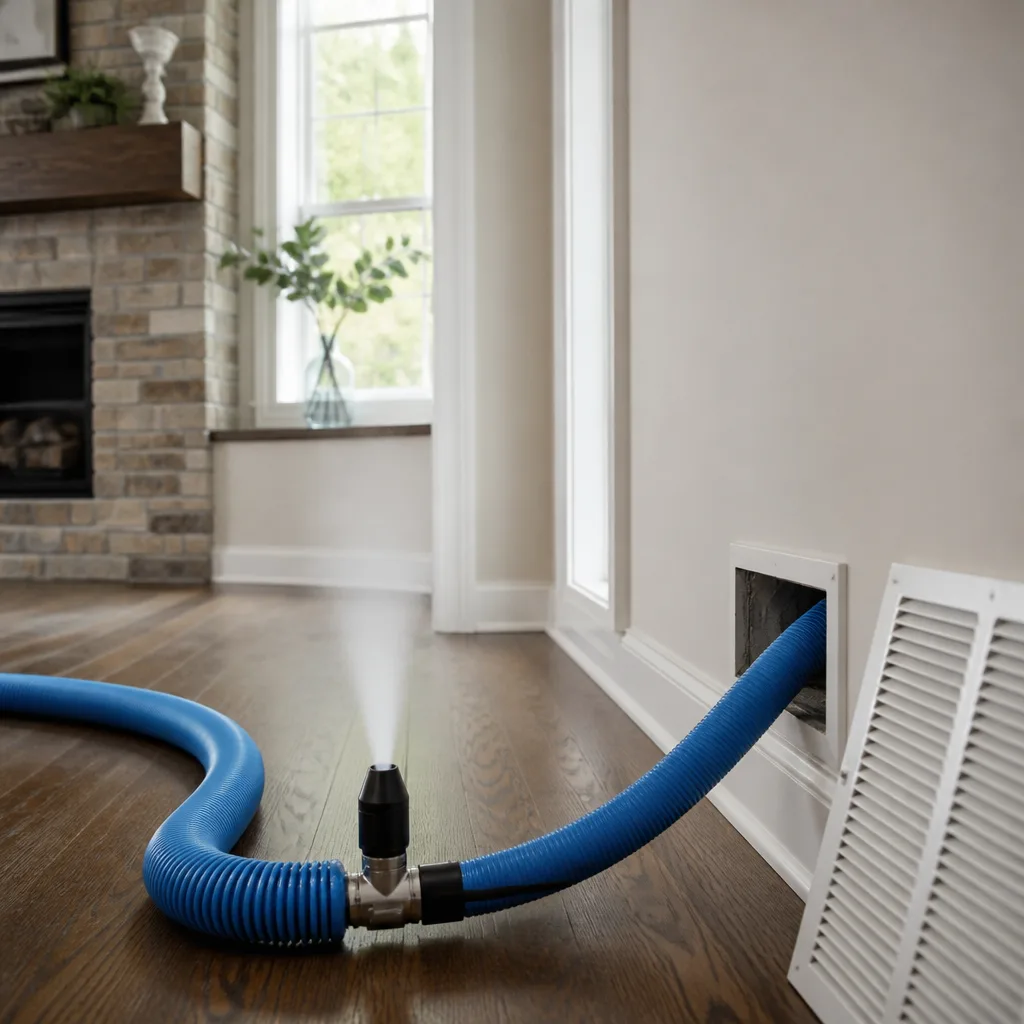 Sanitizing & deodorizing
Whole-system duct and dryer vent check with before-and-after photos - you see exactly what came out of your vents
That "$99 whole-house special" is a bait ad - the real number appears once they are in your hallway, or the "clean" is a shop-vac at the register. We photograph the inside of your ducts before and after instead.
The Complete Guide to Air Duct Cleaning in Casa View
A vacuumed vent cover is not a cleaned duct system. Yet that’s what most “duct cleaning” services in Casa View actually deliver: a technician runs a shop vac over the registers, maybe wipes down the grilles, and leaves the trunk lines, the air handler, and the return plenum untouched. The debris those components hold doesn’t go anywhere. It keeps cycling through your rooms every time the system kicks on. In this guide, we’ll walk through what a real full-air-pathway cleaning involves, why the order of steps matters, how to read the documentation a legitimate contractor leaves behind, and what Casa View’s climate and housing stock do to ductwork over time. It’s the guide we’d want if we were hiring this out ourselves.
Quick Answer
Complete air duct cleaning in Casa View is a system-wide process, not a vent rinse: it uses negative air pressure and mechanical contact cleaning to remove debris from supply ducts, return ducts, the air handler, and the coil, all in one visit. A proper job includes source removal to industry standards, containment filtration so contaminants don’t recirculate through the home, and a post-cleaning inspection with before-and-after documentation. Typical whole-home pricing runs roughly $400 – $800 depending on square footage and system complexity, with the written estimate setting the final price.
Styles & brands we work with
- Whole-home duct cleaning
- Dryer vent cleaning
- Camera inspection
- Sanitizing & deodorizing
Table of Contents
- Why Casa View Homes Are a Duct-Cleaning Market
- What a Full Air Pathway Actually Means
- Source Removal vs. Contact Vacuuming: The Difference That Matters
- What Negative Air Pressure Does Inside a Duct
- Why Cleaning Ducts Without the Air Handler Recontaminates the System
- Treated, Not Just Cleaned: The Sanitizing Step
- How to Read a Post-Cleaning Inspection Report
- What Air Duct Cleaning Costs in Casa View
Why Casa View Homes Are a Duct-Cleaning Market
Casa View sits in a part of Dallas where the physical environment works against ductwork in two specific ways. The first is the soil. The blackland clay under this neighborhood expands and contracts dramatically with moisture, and that movement stresses slab foundations and the ductwork embedded in or beneath them. Flex duct runs can develop sags and separations where they meet the trunk, and rigid duct joints loosen as the structure shifts. Every one of those gaps is an entry point, pulling attic air, insulation fibers, and soil dust into the supply stream.
The second factor is the attic. Casa View’s housing stock includes a large share of homes built in the 1950s and 1960s, many with ductwork that’s spent decades in an unvented or poorly vented attic where summer temperatures routinely climb well above 120°F. Heat cycling like that breaks down the interior liner of flex duct and accelerates the breakdown of old duct tape and mastic seals. When the liner flakes, those particles travel into the living space.
- Older flex duct with degraded liners sheds fibers directly into the air stream
- Clay-soil foundation movement opens joints where duct sections meet
- Pollen season compounds buildup as the system pulls outdoor air through returns
- Pet dander and dust mite debris settle in low-velocity return trunks and stay there
None of that is visible from a vent cover. It’s only found when someone actually puts equipment into the system and looks. That’s the starting point of any honest air duct cleaning Casa View job.
What a Full Air Pathway Actually Means
Think of your HVAC system as one continuous loop. Air enters through the return grilles, travels down the return trunk to the air handler, passes over the evaporator coil, gets pushed into the supply plenum, and distributes through the supply branches to every register in the house. Contamination anywhere in that loop recontaminates every other part of it. Cleaning only the supply side is like mopping a floor without turning off the faucet that’s flooding it.
A full air-pathway cleaning in a Casa View home covers, in order:
- Return intakes and grilles – the entry point where the largest debris load typically collects
- Return trunk and branches – cleaned under negative pressure, with mechanical agitation of the duct walls
- Air handler cabinet – the blower compartment and surrounding surfaces, where dust accumulates on the fan blades and housing
- Evaporator coil – a dirty coil reduces cooling efficiency and becomes a mold-friendly surface in a humid climate
- Drain pan and condensate line – standing water in a pan mixed with dust creates the exact conditions for biological growth
- Supply plenum and branches – cleaned from the plenum outward, register by register
- Supply registers and diffusers – removed, cleaned, and reinstalled
Skipping any one of those steps leaves a reservoir of contamination that the blower will redistribute within a few operating cycles. That’s why we treat the air pathway as one unit rather than a checklist of separate services.
Source Removal vs. Contact Vacuuming: The Difference That Matters
The NADCA standard for duct cleaning is built around source removal: physically dislodging and extracting the contamination from the surfaces where it accumulated, rather than knocking loose dust that resettles downstream. Contact vacuuming alone, where a technician brushes a hose against a register, doesn’t reach the trunk lines. It doesn’t reach the corners of the plenum. It doesn’t reach the thirty-foot run to the back bedroom. That’s why surface-level services can look finished and leave the system essentially unchanged.
Source removal requires two pieces of equipment working in tandem: mechanical agitation to loosen debris from the duct walls, and high-volume extraction to pull it out of the system entirely. We use Rotobrush contact-cleaning systems for the mechanical side, which drive a rotating brush assembly through the duct while a vacuum line pulls dislodged material back to a HEPA-filtered collection unit. For the trunk lines and larger plenum areas, Nikro industrial vacuums handle the air volume.
The difference on a real job is visible. A contact-vacuumed duct looks somewhat cleaner. A source-removed duct has the accumulated sediment on the bottom of the trunk line gone. Flex duct walls that were coated in gray-brown film come back closer to white. If a contractor can’t explain the difference between the two approaches, the cleaning you’re getting is likely the first kind. For related services like dryer vent cleaning, the same source-removal logic applies: brushing alone doesn’t clear a lint-choked vent, it just moves the plug.
What Negative Air Pressure Does Inside a Duct
Negative air pressure is the principle that makes a whole-system cleaning safe. If you open up ductwork and start brushing without controlling the air, you release contaminants into the living space: dust clouds at the register, fine particulate settling back on furniture. Negative pressure flips the flow. A high-capacity vacuum is connected to the duct system at a strategic point, and the entire duct network is drawn into negative pressure relative to the room. When the technician agitates a duct wall, the loosened material travels toward the vacuum, not back into the room.
We supplement that with Abatement Technologies air filtration deployed at the work area. That equipment captures airborne particulate at the source during the cleaning process. It’s the same class of equipment used in restoration and abatement work, where cross-contamination is not acceptable.
How do you verify the pressure is sufficient? A few things technicians check:
- Vacuum capacity relative to duct volume – a small unit can’t pull negative pressure across a large system
- Seal integrity at the vacuum connection – any gap bleeds pressure and defeats the purpose
- Register and grille closure during cleaning – every opening has to be sealed or the pressure drops
- Visible entrainment – during mechanical agitation, dust should be pulled visibly into the extraction point
If you’re watching the work and see debris settle in the room rather than disappear into an extraction line, the pressure setup isn’t working. That’s a fair question to ask, and a legitimate contractor will explain the setup before they start.
Why Cleaning Ducts Without the Air Handler Recontaminates the System
Here’s the part most homeowners don’t realize until it’s too late: the air handler cabinet, the evaporator coil, and the drain pan are the dirtiest parts of the system in most Casa View homes. The blower pulls air through a filter, but a filter is not a perfect barrier, and the coil operates wet through most of the cooling season. Airborne dust that makes it past the filter sticks to the wet coil fins and forms a mat. The drain pan below the coil collects a mix of condensation and dust, and in Casa View’s humidity, that mix is a hospitable environment for biological growth.
If we clean the ducts, seal the registers, and leave those components untouched, the blower will pick up contamination from the coil and pan on its very next cycle and redistribute it through the freshly cleaned ductwork. Within weeks the interior walls are recoated. The cleaning didn’t fail. The process order was simply incomplete.
That’s why HVAC cleaning is a same-visit service in a proper full-system job: the air handler is opened, the coil is cleaned with coil-safe chemicals, the pan is flushed, the condensate line is cleared, and the blower wheel is cleaned. Only after the mechanical components are addressed do the ducts get their cleaning, because those components are the source. Duct damage found during cleaning gets addressed the same way: it’s repaired and sealed in the same visit rather than referred to a second contractor.
Treated, Not Just Cleaned: The Sanitizing Step
Mechanical cleaning removes what’s there. Sanitizing addresses what could regrow. These are different steps, and skipping the second one in a humid climate is a decision worth understanding. Casa View’s cooling season runs long, and a coil that stays damp for months on end is a surface where biological growth comes back if it’s only cleaned once and left unprotected.
Our Air Quality & Sanitizing service uses Guardsman duct sanitizing products as a documented antimicrobial treatment applied after the mechanical cleaning is complete. The order matters: sanitizing a duct that still has debris on the walls is a waste of product, because the product can’t reach the surface it needs to treat. Sanitizing a cleaned duct adds a treatment step that the mechanical process alone can’t provide.
For homeowners with allergies, asthma, young children, or pets, that additional step is often the reason they call for the service in the first place. For property managers, it’s what makes the documentation meaningful beyond a “we cleaned it” invoice. And if the goal is ongoing indoor air quality rather than a one-time reset, there’s a natural next step: Honeywell and Aprilaire air quality systems installed at the air handler extend filtration and humidity control between service visits. That’s the bridge between a cleaning and a management plan. Our technicians have up to 10 years of experience assessing which upgrade is actually worthwhile for a given home.
How to Read a Post-Cleaning Inspection Report
Ask any contractor what documentation you’ll receive at the end of the job, and the answer tells you a lot about the process. A legitimate post-cleaning report should include visual proof of before and after conditions, not just a service ticket with a signature. Here’s what to look for:
- Before-and-after photographs taken at the same locations: trunk line interior, register boots, coil, and air handler cabinet
- Component-by-component checklist showing what was cleaned, sanitized, or repaired, with each step marked off individually
- Vacuum and equipment used named specifically, not generically (“professional cleaning”)
- Identified problems – leaking joints, disconnected runs, degraded flex liner – documented with recommendations
- Repair and sealing record if any ductwork was fixed during the visit
- Sanitizing product information if the Air Quality & Sanitizing service was included
- Technician signature and service date
If the report is a single page with a checkbox, or the “before and after” photos are shots of the vent covers only, the work is unlikely to have reached the trunk lines. Ask to see duct interior photos taken during the cleaning, not just before and after the register was wiped.
What Air Duct Cleaning Costs in Casa View
Cost for air duct cleaning in Casa View depends on square footage, the number of separate HVAC systems, and whether the job includes the air handler, sanitizing, and duct repair. Typical whole-home ranges run from about $400 for a smaller single-system home up to $800 or more for larger homes with multiple systems, additional services, and duct sealing work. The written estimate sets the final price and is presented before work starts, not after.
| Service | Typical Estimated Range |
|---|---|
| Full-system air duct cleaning (single system, up to ~2,000 sq ft) | $400 – $600 |
| Full-system cleaning, larger home or multiple systems | $600 – $900 |
| HVAC cleaning (air handler, coil, blower, drain pan) | $200 – $450 |
| Dryer vent cleaning | $120 – $250 |
| Duct repair and sealing (per affected section) | $150 – $500 |
| Air Quality & Sanitizing add-on | $150 – $350 |
The pattern most contractors follow that leads to a shock invoice: advertise a low teaser price, arrive on site, then price each register individually until the total is several times the quote. We don’t do per-vent pricing. One flat price per system, agreed in writing before the work starts, and before-and-after photos of your own ducts. That’s the standard a Casa View homeowner should expect from anyone they hire. See our main air duct cleaning service page for details on what a full-system visit includes.
Common Mistakes to Avoid
- Hiring on price alone. A price that’s meaningfully below the market for a full-system job usually means less equipment or fewer steps, and the work will show it. Ask what’s included before you compare numbers.
- Cleaning the ducts and skipping the air handler. In Casa View’s humid climate, a dirty coil recontaminates clean ductwork within weeks. The coil, blower, and drain pan are the source, not the ducts.
- Accepting vent-cover photos as proof of work. A register grille is one small part of the system. Ask to see duct interior photos at the trunk line and plenum.
- Skipping negative pressure equipment. Cleaning without proper containment recirculates the contamination through the house during the job. Abatement Technologies filtration and proper vacuum setup prevent that.
- Ignoring duct damage found during cleaning. Loose joints and detached flex runs need to be repaired and sealed during the same visit, or the newly cleaned system draws attic air back in through the gaps.
- Sanitizing before cleaning. Applying antimicrobial product to duct walls that still have debris on them doesn’t reach the surface. Cleaning has to happen first, always.
- Believing duct cleaning is a one-time fix. Every few years is the honest interval for most homes, but a home with pets, allergies, or recent renovation may need it sooner. Ask for an inspection-based recommendation, not a calendar.
See the difference
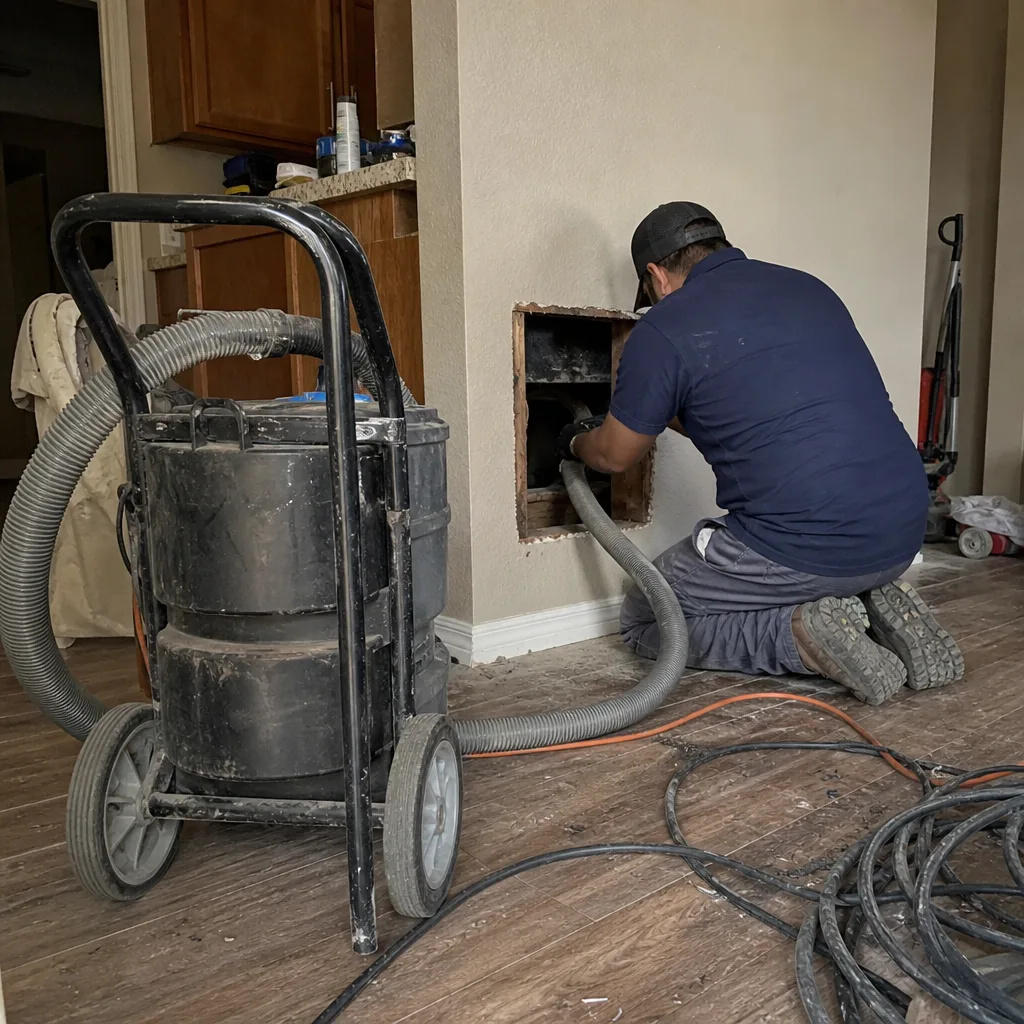 Before
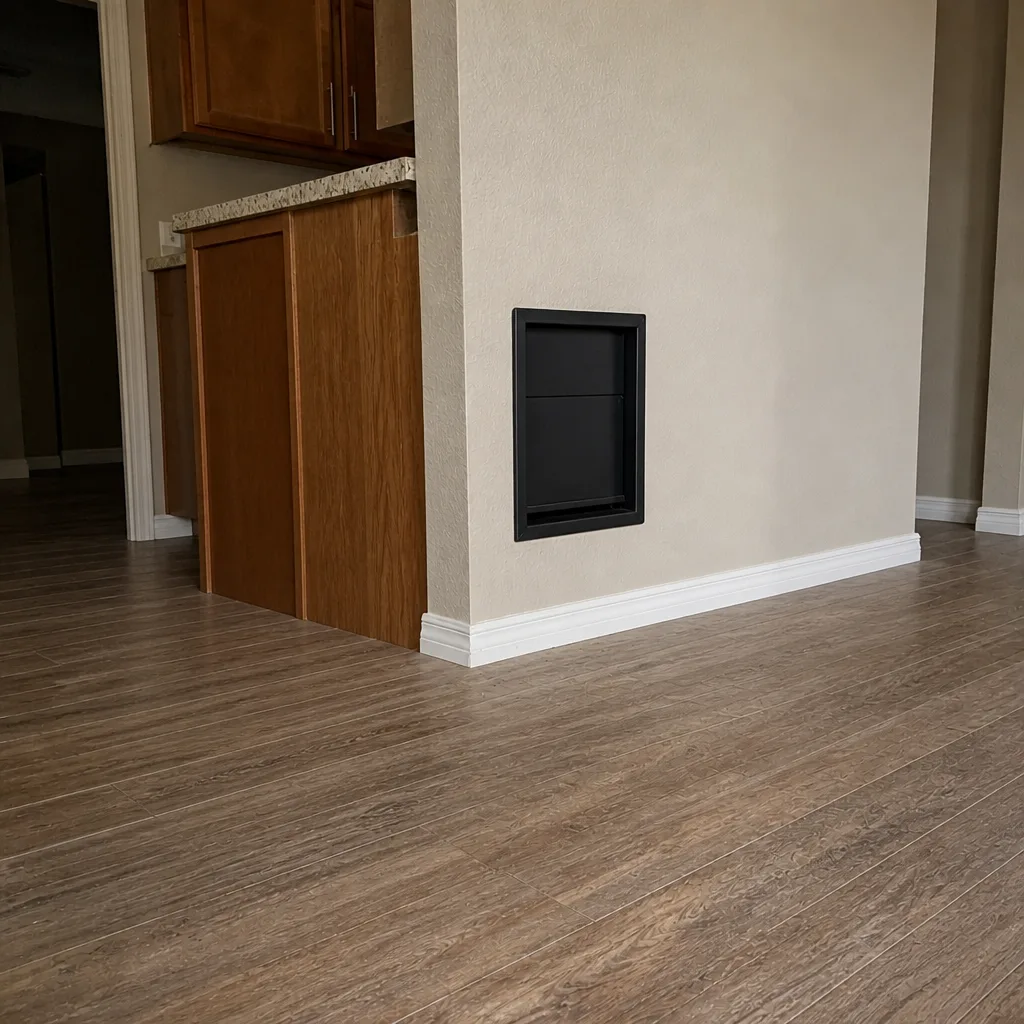 After
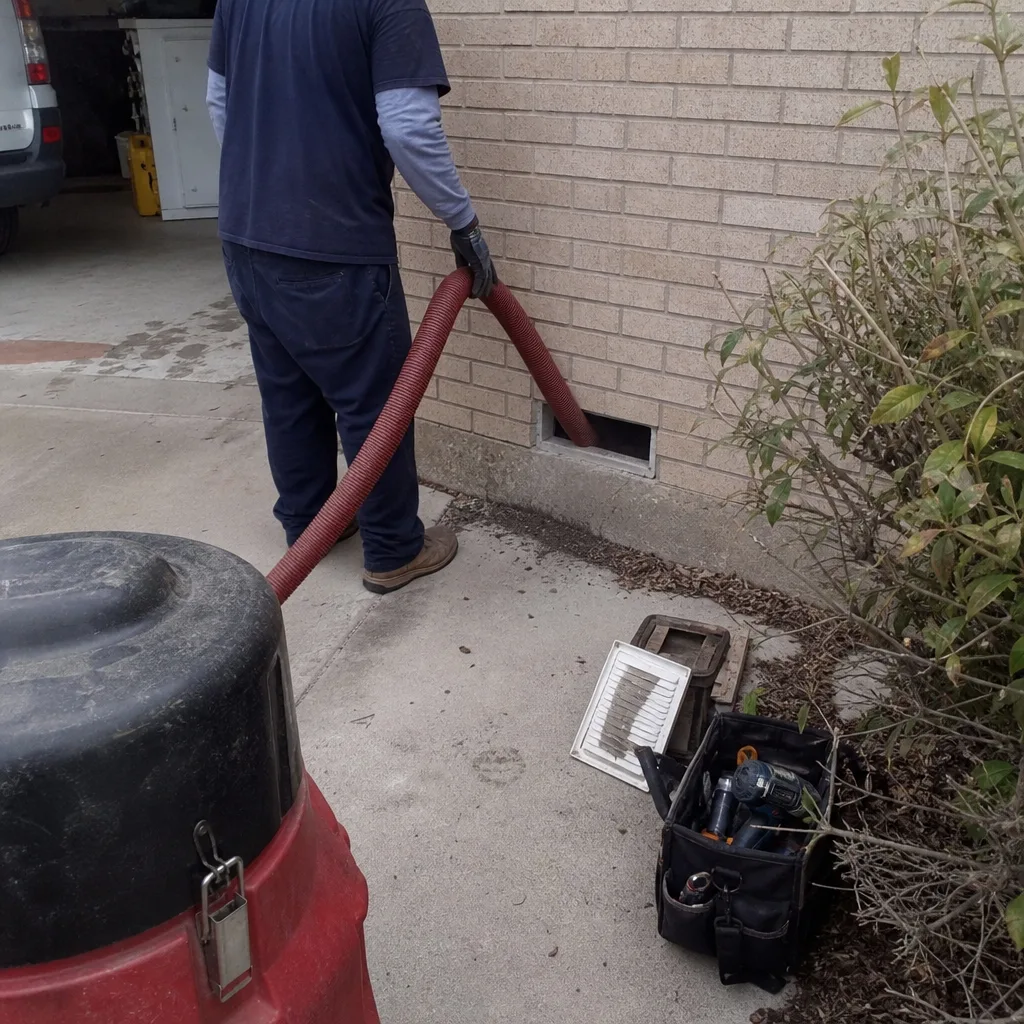 Before
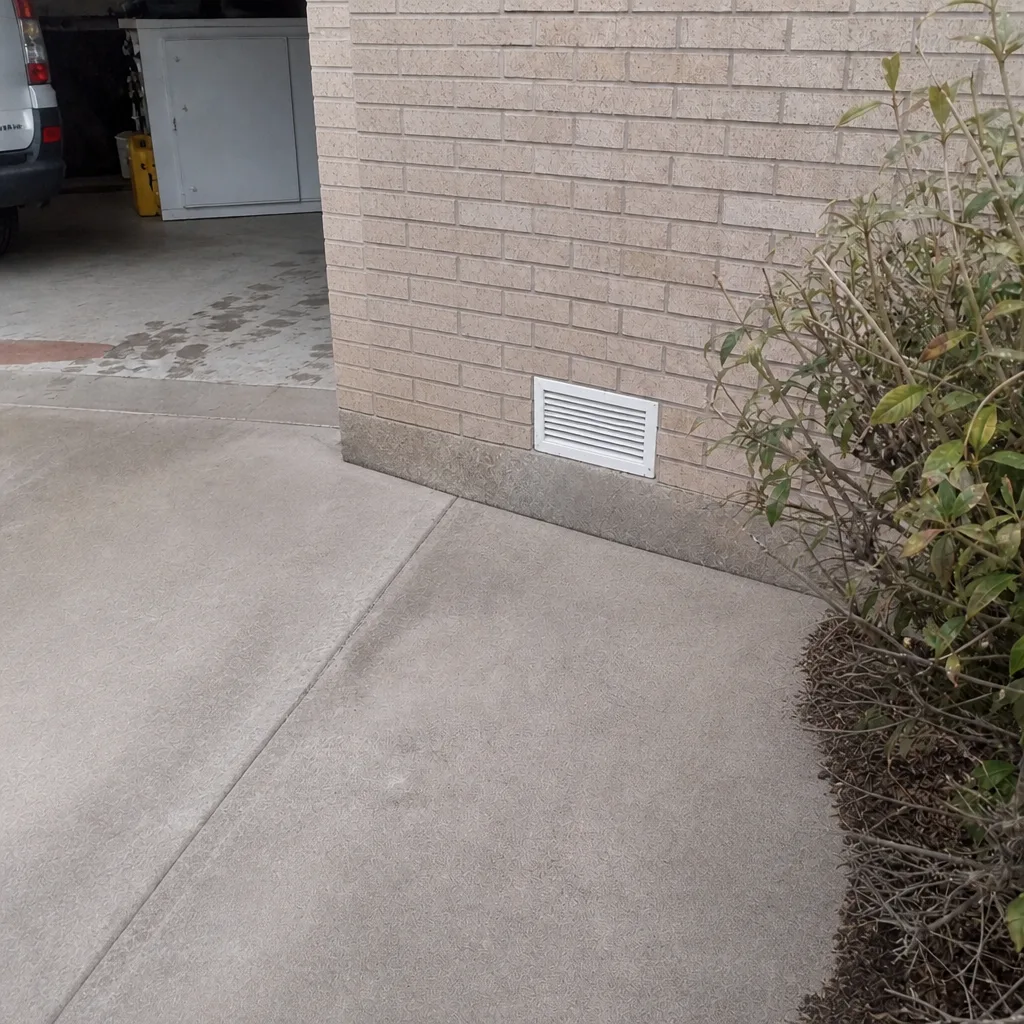 After
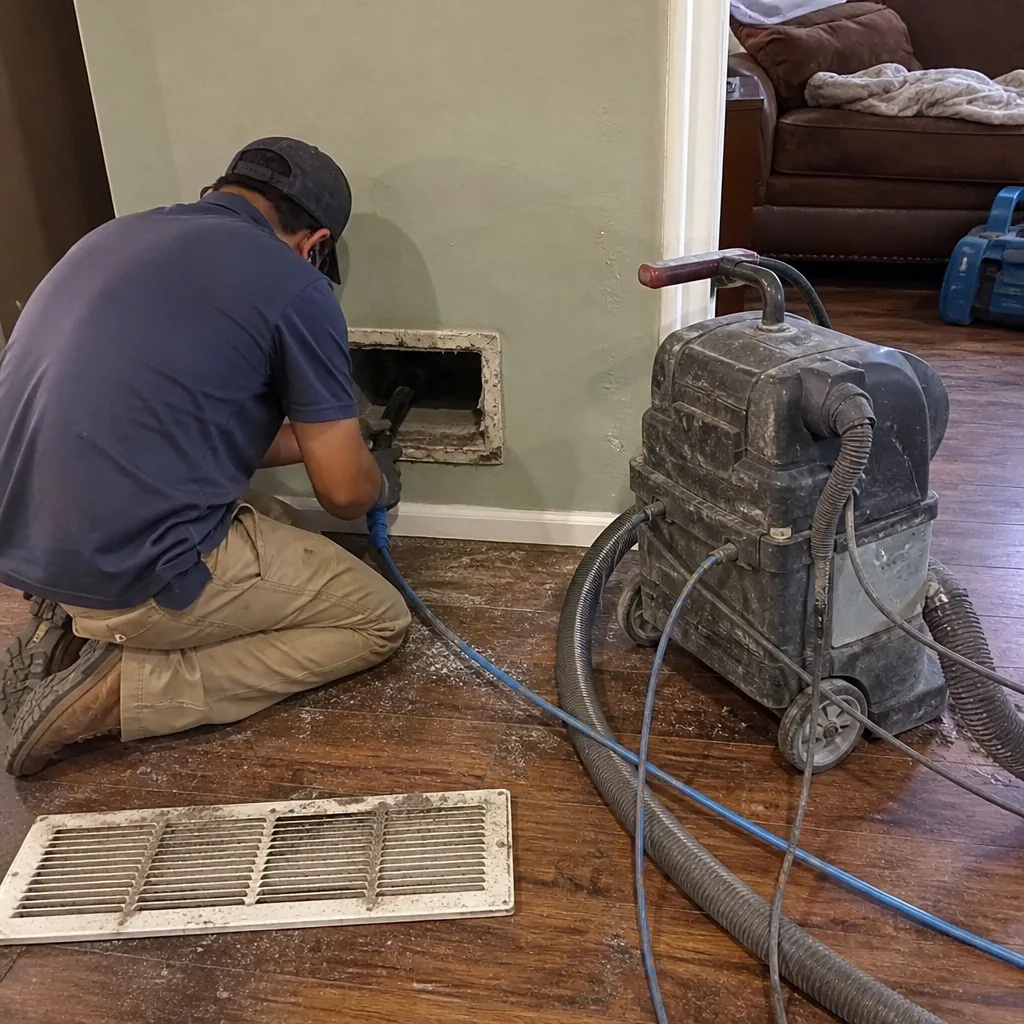 Before
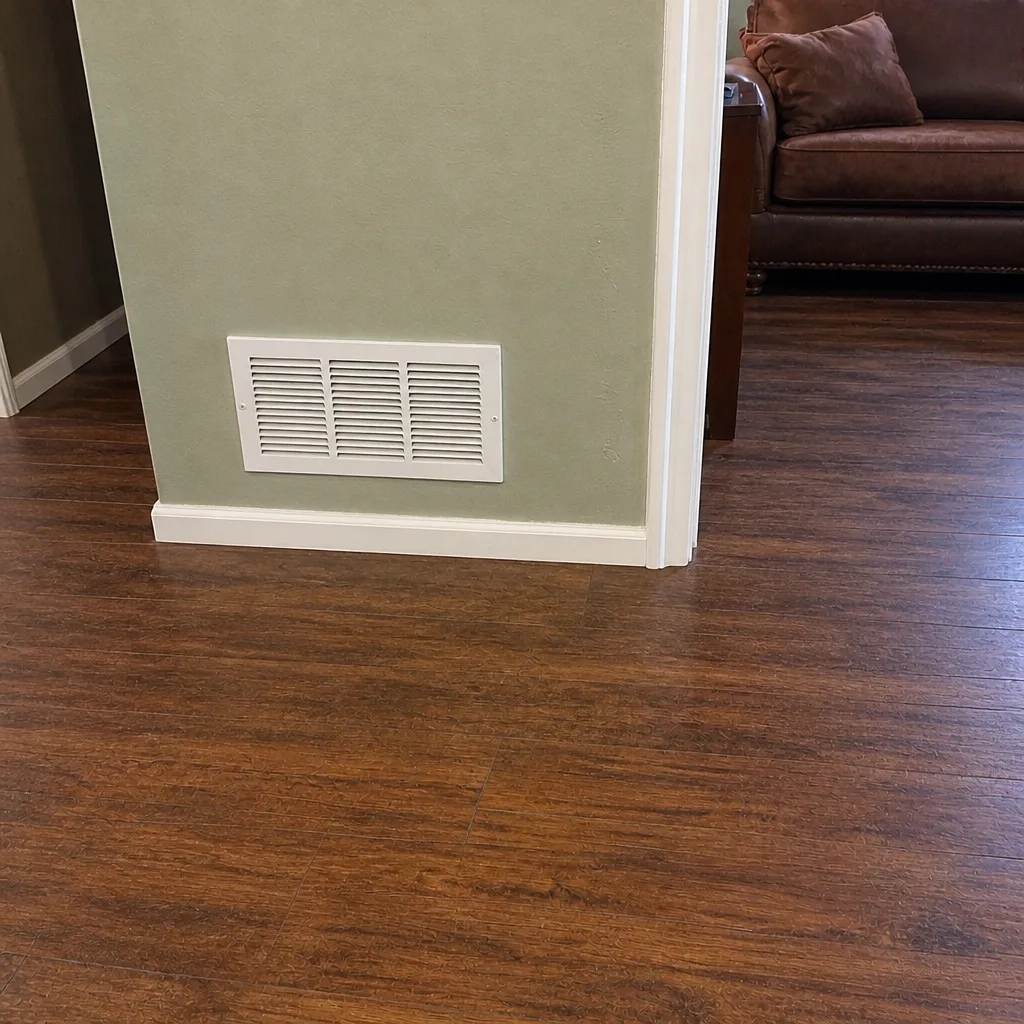 After
When to Call a Professional
Some situations warrant a call to a professional rather than a wait-and-see approach. If you’ve recently moved into an older Casa View home and don’t know the service history of the HVAC system, that’s a starting point. If anyone in the home has allergies, asthma, or respiratory sensitivities, and you’ve noticed the symptoms intensify when the system runs, that warrants inspection. If you see visible dust discharge from the registers, notice increased dust accumulation on surfaces within days of cleaning, or smell a musty odor when the heat or AC kicks on, those are signals worth checking. Visible mold on a register or a moisture problem in the air handler cabinet is a call-a-professional situation, not a DIY one.
For property managers, scheduling a full-pathway cleaning between tenants is a practical move that documents the condition of the system and establishes a baseline for the next occupant. Air Duct Cleaning Casa View offers free estimates in Casa View. Call (888) 886-6271. We answer 24/7. Fast dispatch from 7am to 7pm, Sunday through Friday.
Frequently Asked Questions
Typical whole-home air duct cleaning in Casa View runs about $400 – $800, depending on square footage, the number of systems, and whether air handler cleaning, sanitizing, or duct repair are included. The written estimate sets the final price before any work starts. Call (888) 886-6271. We answer 24/7. Fast dispatch from 7am to 7pm, Sunday through Friday.
Lower quotes usually reflect a lower scope: contact vacuuming at the registers rather than source removal from the trunk lines, no air handler service, no containment filtration, and often per-vent pricing that climbs after arrival. Ask what equipment is used, whether the air handler and coil are included, and whether the quote covers the whole system at a flat price. That comparison usually explains the difference. Call (888) 886-6271 for a written quote you can compare side by side.
Ask for before-and-after photographs taken inside the ductwork, at the trunk line and plenum, not just at the vent covers. A legitimate contractor will also leave a component-by-component checklist showing each step of the job, the equipment used, and any repair or sanitizing that was performed. If those documents aren’t offered, ask for them before you hire. Call (888) 886-6271 to schedule an estimate and ask what documentation we provide.
Most homes benefit from a professional cleaning every few years. Homes with pets, allergies, recent renovation, or a history of smoking need it more often. Casa View’s long cooling season and older housing stock can shorten that interval. A physical inspection, not a preset calendar, should drive the recommendation. Call (888) 886-6271 for an assessment.
It’s not required, but many homeowners prefer to be out of the home during the mechanical cleaning step when the most dust is dislodged, particularly if anyone in the household has respiratory sensitivities. With proper negative pressure and on-site containment filtration, the work can be done while you’re present. Discuss the schedule when you book the estimate. Call (888) 886-6271 for details.
Yes. Duct repair and sealing is part of the same visit for us. When mechanical cleaning reveals disconnected runs, degraded flex liners, or separated joints, we repair and seal them rather than referring you to a second contractor. That prevents the freshly cleaned system from pulling attic air back in through the gaps. Call (888) 886-6271 to schedule and mention any known duct issues.
The Bottom Line
Air duct cleaning in Casa View is a system-wide process, not a surface event. The supply registers, the return trunks, the air handler, the evaporator coil, the drain pan, and the plenum are all part of one air pathway, and contamination in any part of that pathway recontaminates the rest. Real cleaning relies on mechanical contact equipment, negative air pressure, and on-site containment filtration, and it ends with documentation that shows what was done. Casa View’s clay soil and hot attics make that full approach more important here, not less. If you’re ready to see what a real full-pathway cleaning looks like in your home, call us for a free estimate at (888) 886-6271. We answer 24/7. Fast dispatch from 7am to 7pm, Sunday through Friday.
Written by the team at Air Duct Cleaning Casa View.